


Hello, I'm Ylli Bajraktari, President of the Special Competitive Studies Project. In this edition of our newsletter, SCSP's Quantum Commission staff share their thoughts following their visit last month to New Mexico, known as the “Land of Enchantment,” widely recognized as a leading regional quantum tech hub, and last but not least, the home state of our bipartisan Commission’s co-chair, Senator Ben Ray Luján.
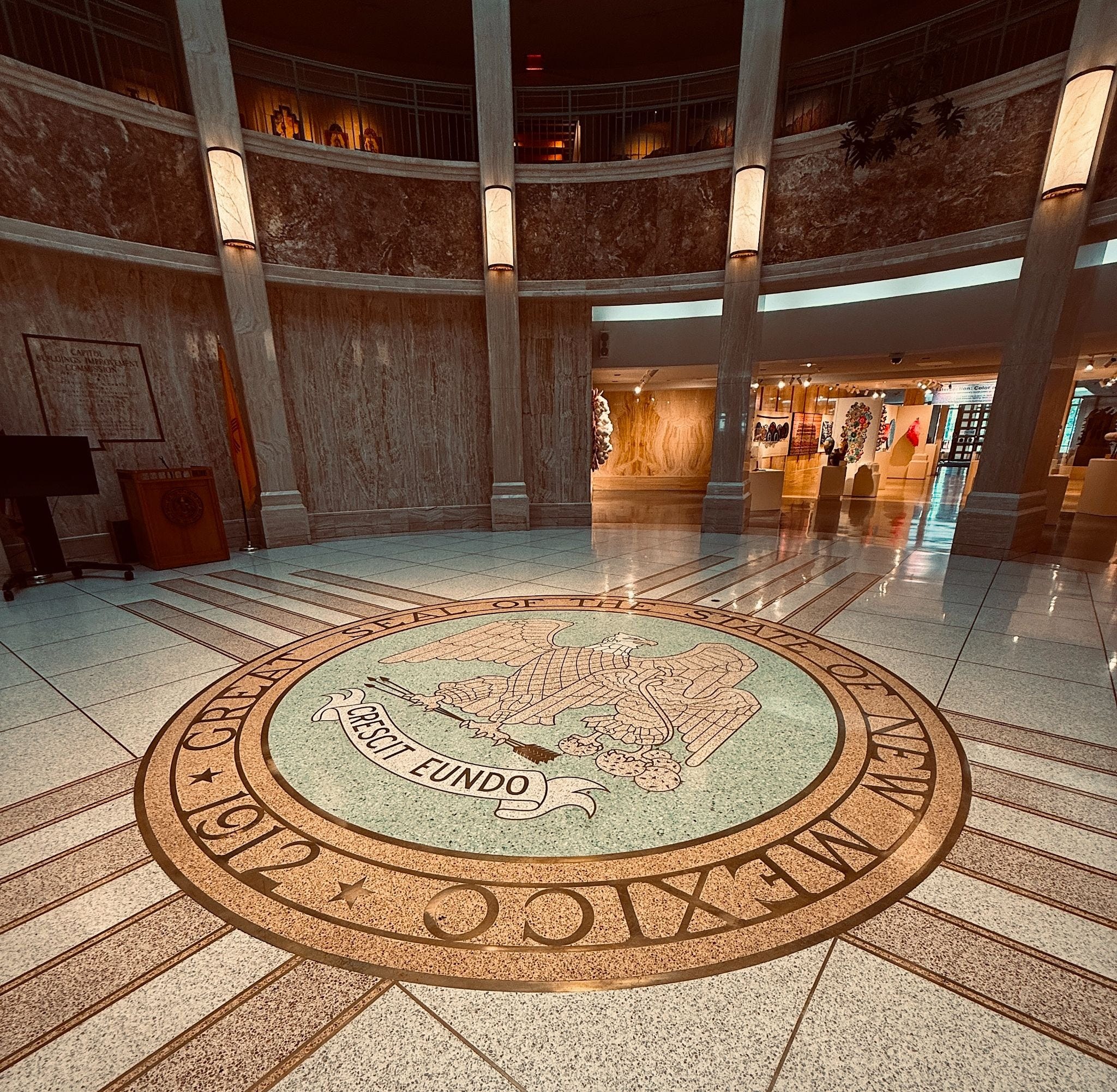
Crescit Eundo
The New Mexico State Capitol, known as the Roundhouse, has the state seal and motto set into its marble floor. The motto, Crescit Eundo, is Latin for “it grows as it goes”—a phrase that reflects gaining strength and momentum through progress.
That same spirit of growth and momentum is happening in New Mexico’s quantum ecosystem. Last month, SCSP’s Commission on U.S. Quantum Primacy (CUSP) led a delegation to the state to see how it is building its place in the national quantum landscape.
The main purpose of the visit was to convene the Commission’s second plenary session, which focused on our forthcoming preliminary report. We also had the opportunity to tour labs and hear briefings from local quantum stakeholders. These included two of the nation’s premier national laboratories, both based in New Mexico, and both with storied histories in American science and national security: Sandia National Laboratories (SNL) and Los Alamos National Laboratory (LANL).
Day One: Sandia National Labs and the CUSP Plenary
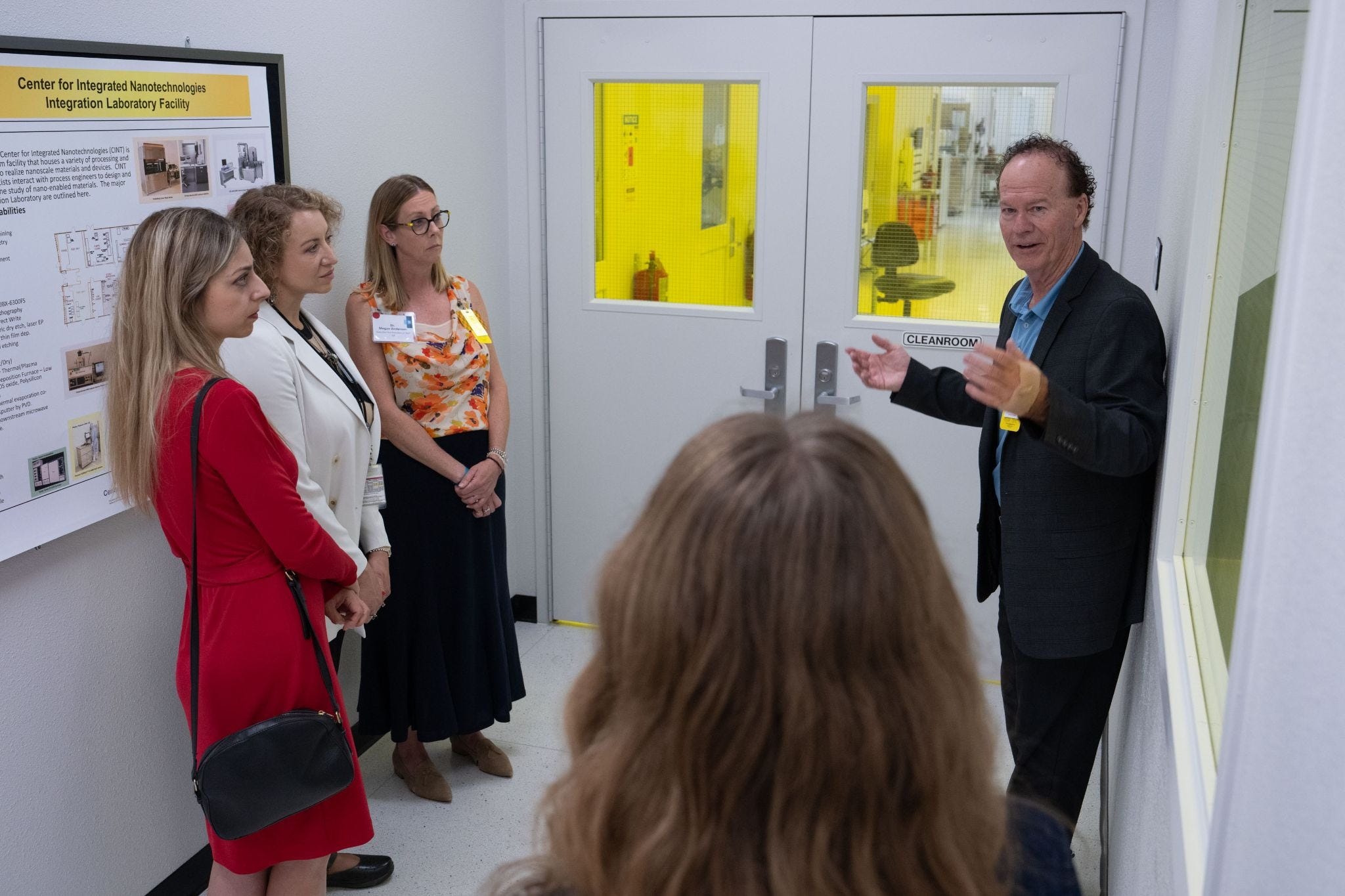
Our first day began with a tour of Sandia, where engineering and manufacturing expertise is being turned toward quantum hardware.
Sandia’s Microsystems Engineering, Science and Applications (MESA) facilities fabricate the chips that trap charged atoms for use as qubits.
Its QSCOUT testbed gives external researchers direct access to a small trapped-ion quantum computer.
Sandia researchers developed ‘gate set tomography’ (GST), now a widely used method for diagnosing errors in quantum computers.
It also leads work on quantum sensors for precision timing and navigation that don’t depend on GPS systems.
That afternoon, Commissioners convened for the plenary session to discuss the core arguments and structure of the preliminary report, which is due to be published this Fall. In addition, to offer a broader view of New Mexico’s quantum ecosystem, representatives from Roadrunner Venture Studios, Quantum New Mexico Institute, and Quantinuum briefed Commissioners on their perspectives regarding emerging issues in the quantum landscape.
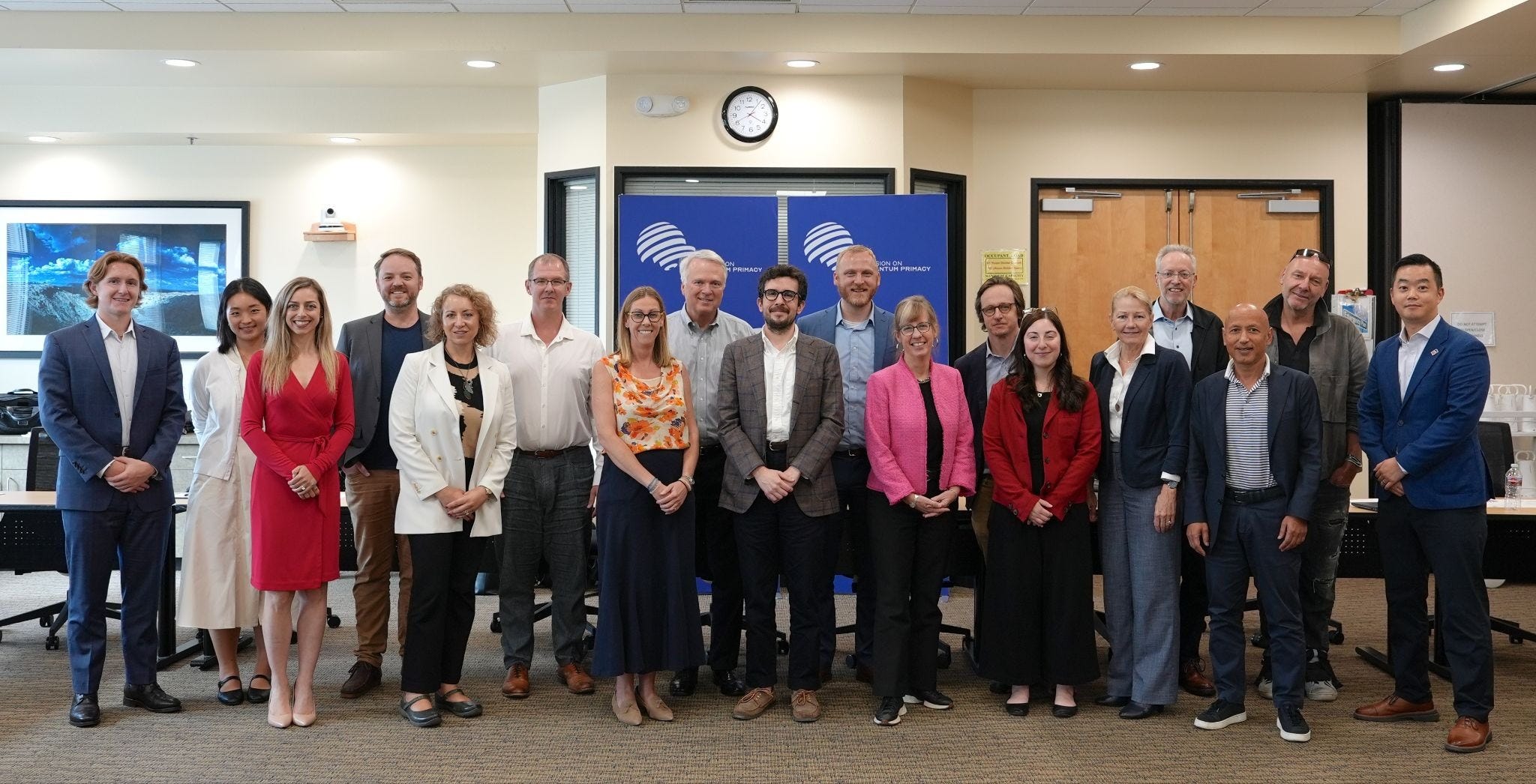
Day Two: Santa Fe
Sandia and Los Alamos show how central the federal government is in advancing quantum technology. In the state capital of Santa Fe, the delegation had the opportunity to learn about the state government’s efforts to boost quantum development.
The Commission met with New Mexico Governor Michelle Lujan Grisham and Cabinet Secretary Rob Black of the New Mexico Economic Development Department (EDD). EDD, together with the State Investment Council under Governor Grisham, is leading the effort to build an ecosystem where quantum companies can start, scale, and deploy their technologies. The state has committed more than $450 million to quantum research, startup infrastructure, and partnerships with DARPA, Sandia, Los Alamos, and private industry.
That investment is already showing results.
Roadrunner Venture Studios. The state selected Roadrunner to deploy $25 million to establish and run a quantum venture studio. It is building a quantum campus in Downtown Albuquerque’s Innovation District. The campus will include a multi-node quantum network, dilution refrigerators, a testbed, and packaging and prototyping facilities, along with a Founder-in-Residence program to recruit entrepreneurs to launch companies in the state.
Quantinuum. The company is expanding its footprint in Albuquerque. With $1.5 million in combined state and city economic development support, it is converting a vacant building into labs and offices focused on integrated photonics for its trapped-ion systems.
Quantum Education and Workforce Development: Talent is the other half of the story. The University of New Mexico’s Quantum New Mexico Institute anchors research and graduate training. Central New Mexico Community College’s Quantum Technician Bootcamp builds the technician workforce that labs and companies will need as the industry scales.
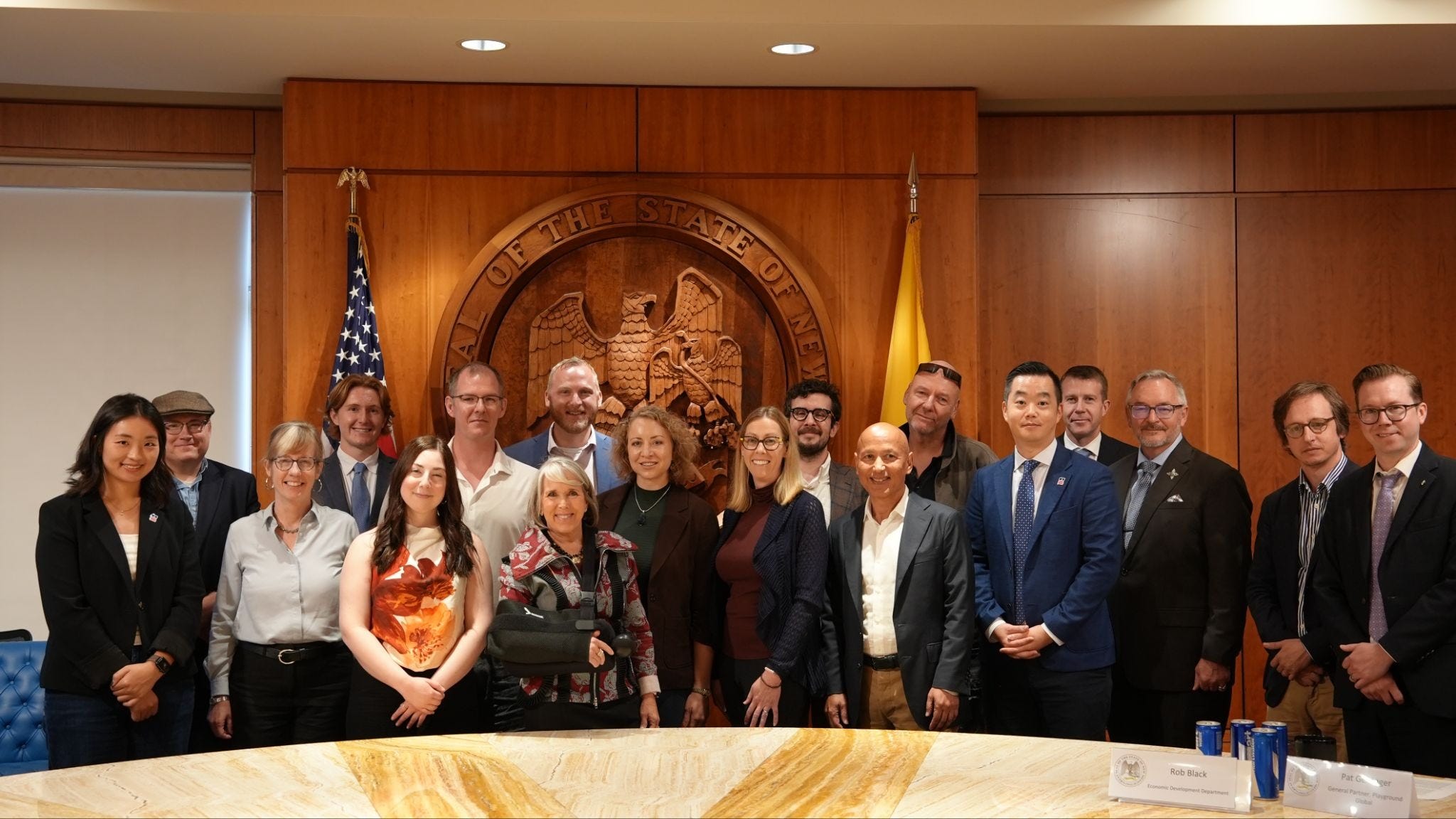
Day Two, Continued: Los Alamos National Lab
The delegation then drove up to Los Alamos National Laboratory. Staff briefed us on the lab’s quantum work, whose roots reach back to the formative years of quantum computing. In 1983, Richard Feynman delivered a lecture at Los Alamos outlining a model of a quantum computer, building on his earlier argument that quantum systems could best be simulated using computers that themselves obey quantum mechanics. By the mid-1990s, Los Alamos researchers Emanuel Knill, Raymond Laflamme, and Wojciech Zurek were helping establish the foundations of quantum error correction and fault-tolerant computing—essential steps toward making quantum computers reliable. In February 2026, the lab opened a Center for Quantum Computing to bring its quantum work together under one roof.
The Commission also learned about LANL’s role in supporting DARPA’s Quantum Benchmarking Initiative, which is working to separate real progress toward utility-scale quantum computers from hype. Commissioners toured the Pulsed Field Facility of the National High Magnetic Field Laboratory, where extreme magnetic fields are used to probe quantum materials and test theoretical predictions against experimental results.
Stepping back from the day’s scientific discussions, the team also had the chance to explore LANL’s history. LANL staff walked Commissioners through artifacts from the lab’s founding, offering a glimpse into Los Alamos’ role in the development of quantum science.
Fuller Lodge
The trip ended at Fuller Lodge, a historic building that was built in 1928 from hand-hewn ponderosa logs for the Los Alamos Ranch School. When J. Robert Oppenheimer chose the remote mesa for the Manhattan Project, the lodge became the dining hall and social center for the scientists who gathered there.
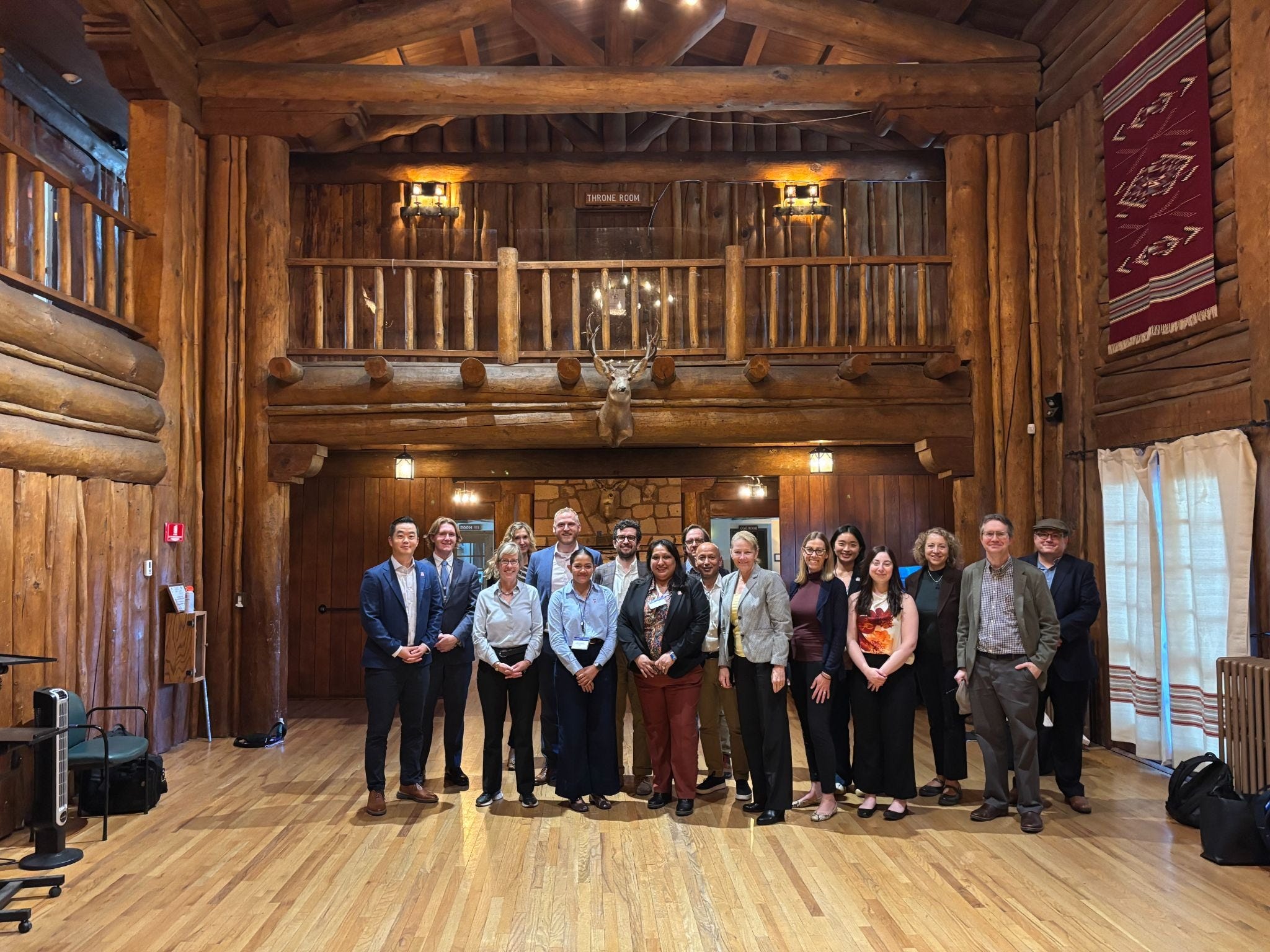
Standing where that community once met, it was hard to miss the parallel. Eighty years ago, the United States brought extraordinary talent to New Mexico to meet a national challenge. Today, New Mexico is building the labs, companies, and workforce to help the country lead in the next great technology race. The Commission will carry the lessons learned from this trip forward into its preliminary report, build on the progress already underway, and consider how that momentum can translate into lasting quantum primacy.
Crescit eundo.
AI+ Robotics Summit: More Speakers Announced

The AI+ Robotics Summit lineup is growing. Joining us October 14 in Washington, DC are The Honorable Michael Cadenazzi, Assistant Secretary of War for Industrial Base Policy, and leaders from Siemens, Mytra, Path Robotics, the Semiconductor Industry Association, MIT, and Case Western Reserve University. They’ll be on stage alongside previously announced speakers from FANUC America, NVIDIA, Boston Dynamics, Agility Robotics, Intrinsic, and more.
Spots are filling up, so register now before it’s too late!